Chapter 1
IN THIS LESSON:
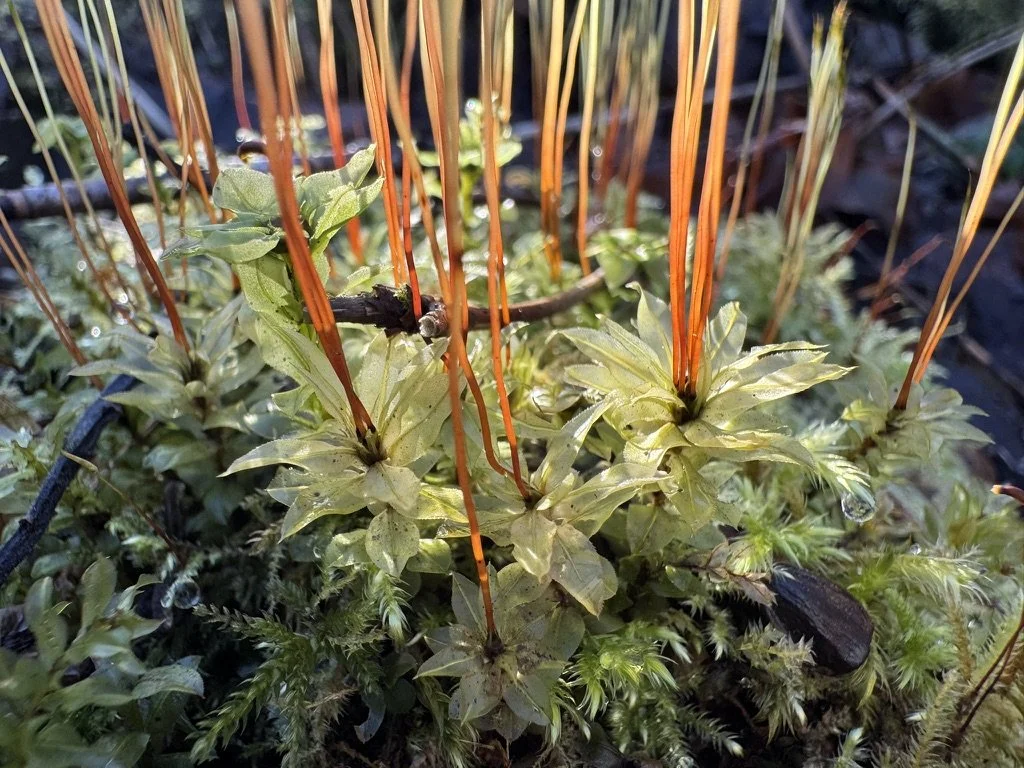
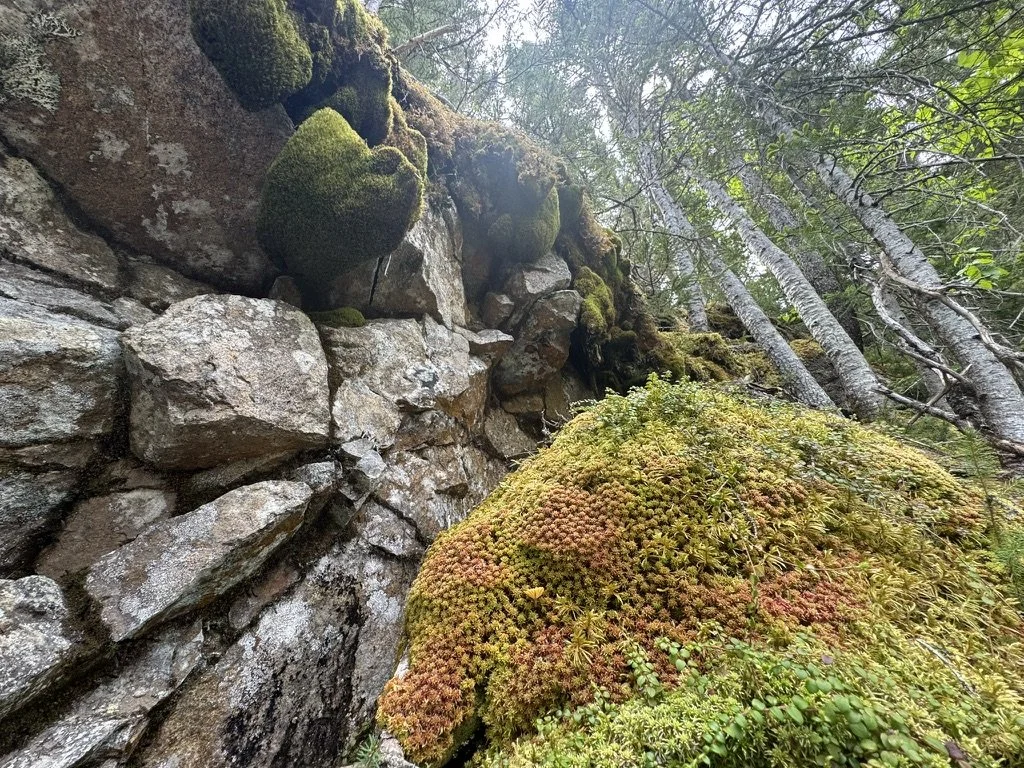
Bryophilous fungi are the el dorado beneath your step. Next time you find yourself on a hike, see if you can observe any necrotic patches peppering bryophytes along the trail
Things you’ll need for this section:
1) 10x hand lens (preferably with light)
2) field knife (primarily for bark + rock bryophytes)
3) paper bags + packets (for folding resources, click here)
The field of bryo-mycology is about pattern recognition. Always keep a field journal with you in the field and note habitat, shade characteristics, humidity, elevation, etc. I once saw the fungus Hilberina sphagnorum, which parasitizes Sphagnum moss, tucked into a peatland depression where both shade and humidity were slightly elevated. Now I have this microniche added to my bryofungi field toolkit.
A helpful resource for getting started in bryology: https://www.britishbryologicalsociety.org.uk/learning/getting-started/
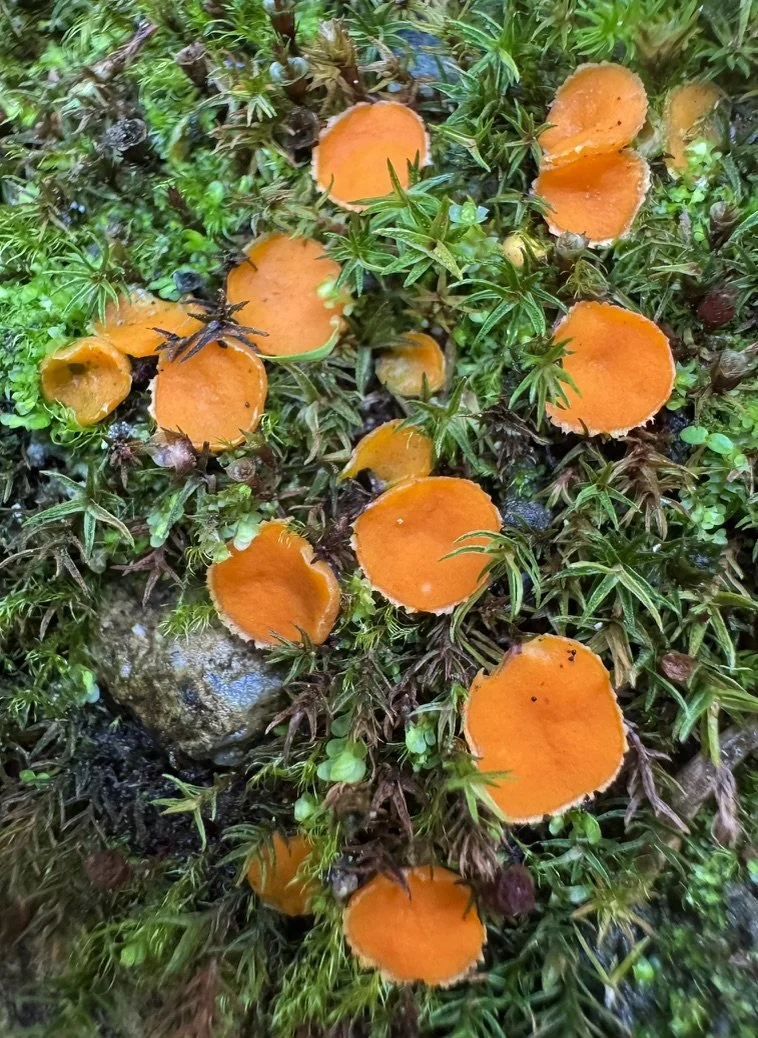
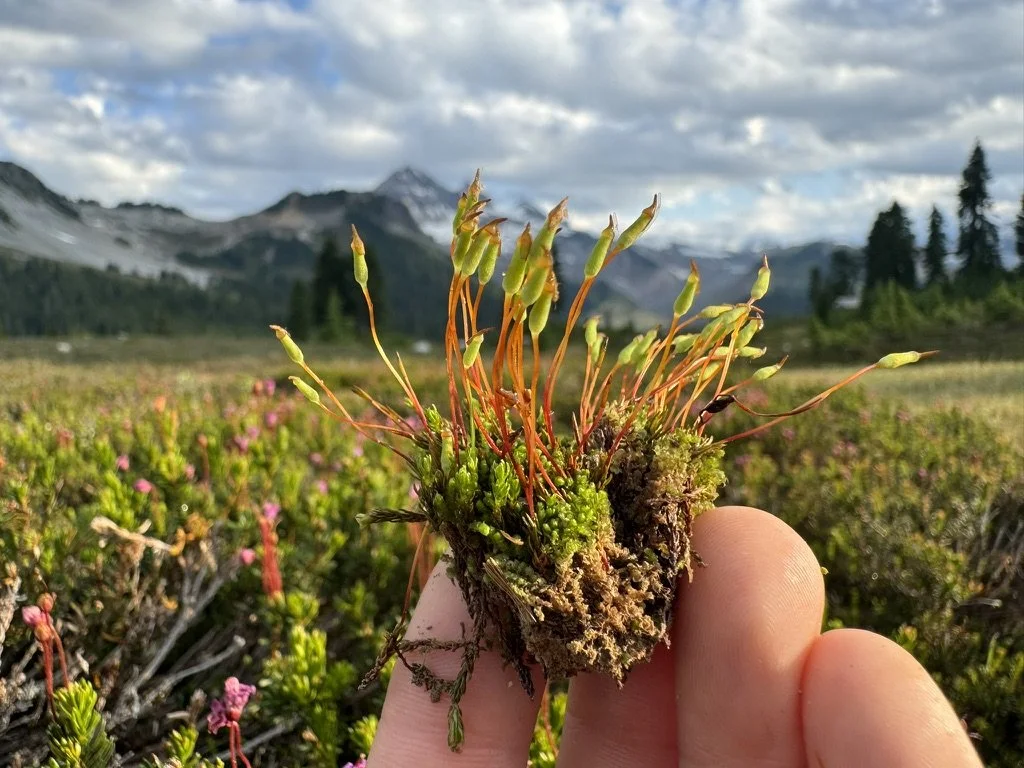
“It is easier to count the number of basidiomes of the bracket-fungi in a forest than to know the number of ascomata in a handful of the moss Hylocomium splendens”
(Döbbeler, Biodiv. Cons. 6: 723 (1997)